Interactive in-gallery kiosk experience for cultural interpretation with 43 annotations in two languages on a single artifact
BACKGROUND
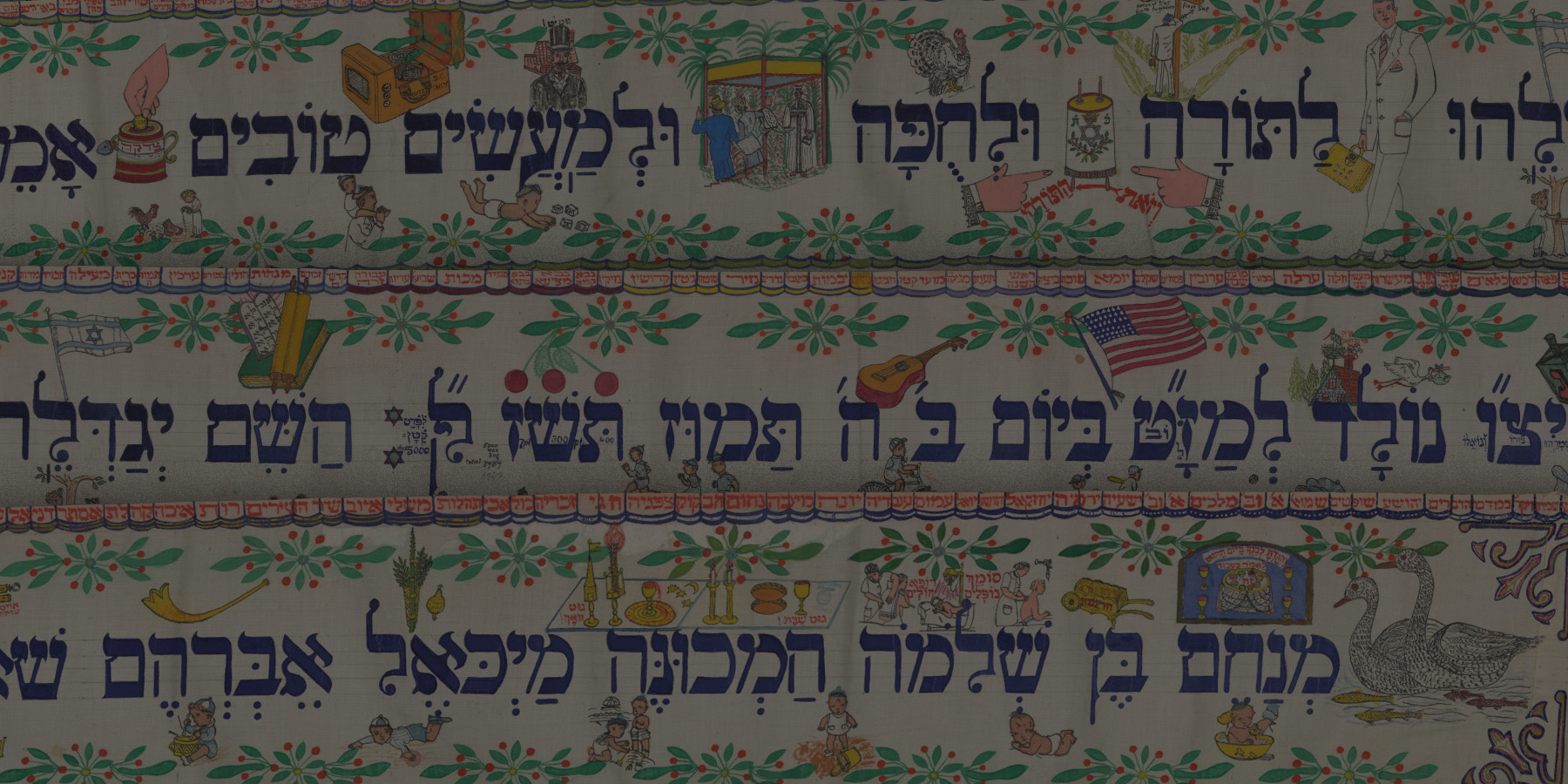
The North Carolina Museum of Art (NCMA) is a landmark cultural institution with two expansive buildings and a 164-acre park. In 2024, the Museum identified an opportunity to enhance in-gallery interpretation through interactive digital tools that could bring stories and context directly to visitors at the object level. The initial project focused on Reuben Eschwege’s Torah Binder from 1947, funded by donor support with the intent to inspire future expansions across exhibitions.
THE CHALLENGE
NCMA sought a flexible and scalable solution to enhance visitor engagement using touchscreen kiosks in the gallery space. The image viewer needed to provide magnification, bilingual content, hotspot annotations, and a compelling visual design optimized for public interaction. Additionally, the museum required that the viewer be embeddable across multiple web platforms for educational outreach and future content reuse. Constraints included a fixed budget, the need to use existing WordPress infrastructure, and a tight delivery deadline.
THE SOLUTION
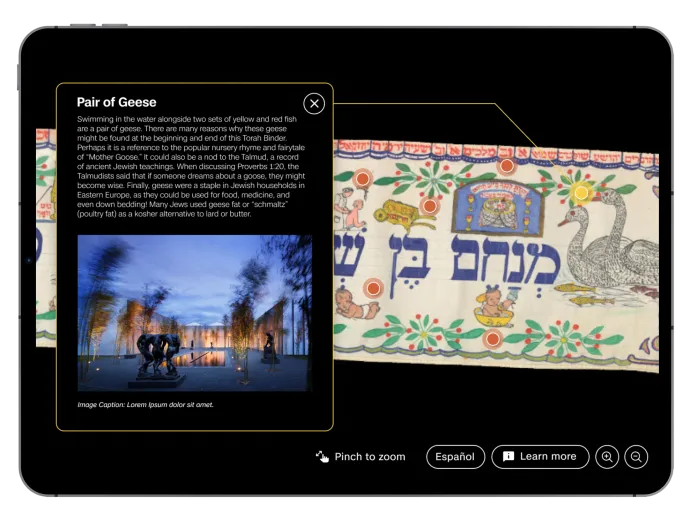
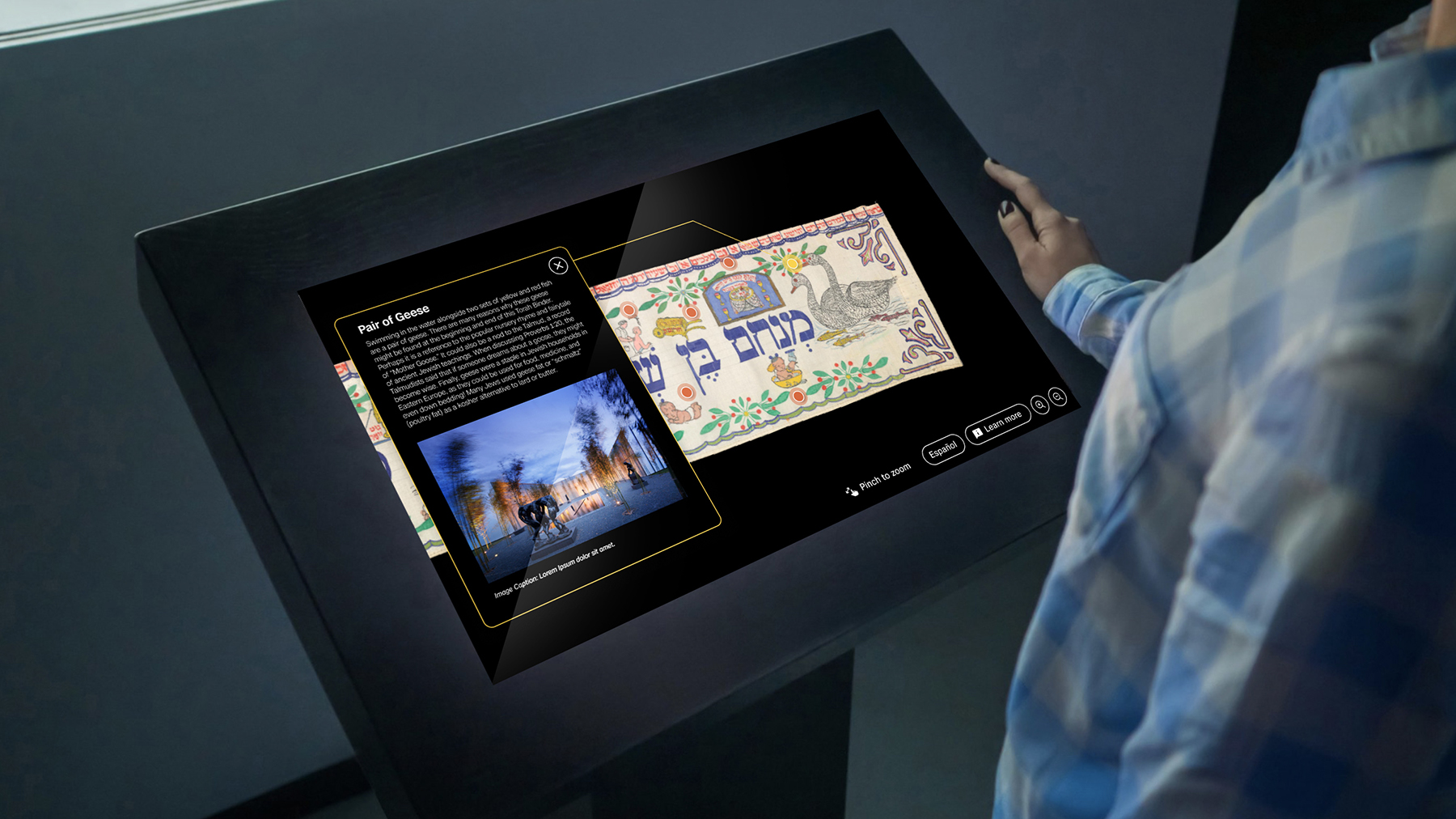
Urban Insight designed and implemented a custom, bilingual Annotated Image Viewer as a WordPress plugin, allowing NCMA staff to upload artwork images, define interactive hotspots, and add titles, descriptions, and related media. The Viewer provides a user-friendly interface for staff to add artwork and hotspots to the existing Digital Labels decoupled WordPress site.
The viewer supports:
- Up to 43 annotations per object, each with English and Spanish content and optional images
- Pinch and zoom high-resolution interactions using OpenSeadragon within a custom interface built on the Clover IIIF Viewer
- In-gallery functionality on touchscreen monitors
- An attractor video to draw in visitors, which plays after five minutes of inactivity
- Embeddable code, enabling use on the web including NCMA’s other digital platforms like NCMALearn.org as well as in-gallery
- IIIF manifest is provided with each image based on data entered in WordPress
The front-end experience was developed using JavaScript and Electron Kiosk deployment with a responsive web version for broader access. Urban Insight also extended the WordPress REST API to deliver annotation data for both platforms, ensuring fast performance and content reusability.
Accessibility and bilingual support were core features, with a language toggle available for all public-facing content.
THE IMPACT
Static Labeling Limitations: The kiosk replaces traditional static labels with a "digital labeling product" that allows for a much higher volume of information and deeper visual exploration than physical labels permit.
Content Management Efficiency: It solves the difficulty of managing digital content by allowing staff to easily upload images, designate annotation areas, and provide descriptions through the museum's existing WordPress CMS.
“High technical aptitude combined with cultural sensitivity to our field of work. Excellent communication across the board from all points of contact. Project managers are responsible to make sure all our hopes are taken care of throughout the process.”